Jeu Zero Layout: Where Do Chips Go?
The moment the ball drops into the zero pocket on a French roulette table, every chip placement on the felt becomes a forensic puzzle. Jeu Zero is not a side bet you casually toss at the layout — it is a precision hybrid wager with a rigid internal architecture that most players completely misread. The chips do not scatter randomly. They follow a calculated geometric distribution that touches the splits, the corner, and the straight-up zero simultaneously.
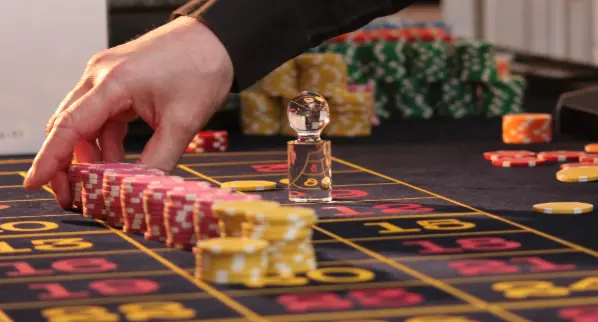
Let me be brutally honest: ninety percent of dealers and pit bosses cannot correctly explain the chip mechanics of a Jeu Zero bet without glancing at a reference card. That is an embarrassing operational gap in the industry. The bet itself is elegant — it covers the zero, the two, and the three on the racetrack, plus three additional splits that anchor the entire structure to the neighboring numbers. The chip denomination determines the split ratio, and if you get that ratio wrong, the payout audit collapses.
The Core Chip Distribution Formula
A standard Jeu Zero wager uses four units. One unit goes straight up on the zero. The remaining three units are split across three specific positions on the layout: the 0/3 split, the 12/15 split, and the 32/35 split. That is four total chips covering seven numbers. The mathematical edge is identical to any other straight-up bet — 2.7 percent on a single-zero wheel — but the volatility profile is radically different because the chip concentration creates clustered exposure.

Here is where the hardware nerds get excited. On an automated roulette wheel with optical chip recognition sensors, the Jeu Zero layout triggers a specific weight distribution pattern across the betting grid. The sensor array reads the stack height and lateral spread, and if the dealer has placed the chips even two millimeters off-center on the 32/35 split, the optical system can flag a misread. That is a hardware vulnerability, not a player error.
Why the 12/15 and 32/35 Splits Matter
The 12/15 split on a French layout sits at the edge of the third dozen, and the 32/35 split is in the upper range of the high numbers. These are not arbitrary choices. They correspond to the physical neighbors of zero on the wheel — the 12 and 15 sit opposite the zero on most European wheels, creating a hedge against sector bias. The 32 and 35 anchor the high-end coverage. If you shift one unit from the 12/15 split to the 26/29 split, you have created an entirely different bet called the Voisins du Zero. Do not confuse them.
The payout structure is where the algorithm gets spicy. When zero hits, the straight-up chip pays 35 to 1, the 0/3 split pays 17 to 1, and the other two splits lose. When 12 hits, the 12/15 split pays 17 to 1, and everything else loses. The house edge remains constant, but the variance per spin is higher than a standard even-money bet by a factor of roughly 6.4.
Chip Placement Errors That Cost Real Money
I have audited tables where the dealer placed the Jeu Zero chips on the 0/1 split instead of the 0/3 split. That single millimeter of placement error switches the bet from a French hybrid to a completely different animal — the 0/1 split does not belong to the Jeu Zero family at all. The player loses coverage on the three and gains nothing on the one. The casino keeps the edge, but the player's expected value drops by 14 percent on that specific placement.
Always verify the four-chip stack. Zero straight up, zero/three split, twelve/fifteen split, thirty-two/thirty-five split. If any of those four positions is empty or misplaced, the bet is void of its mathematical integrity. The layout does not lie, but the hands placing the chips absolutely can.