Suited Tie Payout: How Much Extra?
The suited tie payout is one of the most misunderstood side bets in the entire baccarat ecosystem, and the math behind it is brutal. Most players assume that because a suited tie is rarer than a standard tie, the payout scales proportionally to that rarity. It does not. The suited tie payout typically sits at 22:1, and when you run the true combinatorial probability against that number, the house edge becomes a slaughterhouse.
Let me break down the actual mechanics. A standard tie bet pays 8:1 in most shoes, and the true probability of any tie is roughly 9.5 percent, which already gives the house a fat margin. The suited tie strips it down further: both the banker and player hands must end on the same rank and the same suit. You are not just calling a tie, you are calling a tie with identical suit texture on the final card. The combinatorial frequency drops to roughly 1 in 4.2 hands in a single suit scenario, but across a full eight-deck shoe the probability of a suited tie lands at approximately 0.034 percent. At 22:1, the expected return per unit wagered is deeply negative.
The Real Math Behind the Suited Tie Payout
Here is where the operators get clever. They advertise the suited tie payout as a premium proposition, dangling the 22:1 figure in front of players who see the standard tie at 8:1 and assume the suited version is the smart play. It is not. The ratio between the two payouts is 2.75x, but the ratio between their probabilities is closer to 3.6x. That gap is pure house edge. Run the numbers on 100,000 hands: a standard tie bet loses about 14.4 percent of total stake, while the suited tie wager bleeds closer to 24 percent. The suited tie payout is a trap dressed as a premium bet.
Now consider the shoe composition. Eight decks contain 416 cards. The suited tie requires the final card of both hands to match in rank and suit. The probability calculation must account for card removal effects, and the math gets ugly fast. In a fresh shoe, the suited tie probability is marginally better than in a depleted shoe, but the difference is negligible across the full cycle. What matters is the house edge on suited tie bets, and that edge never dips below 20 percent regardless of deck count or penetration level. 🎲

Why Casinos Push the Suited Tie Side Bet
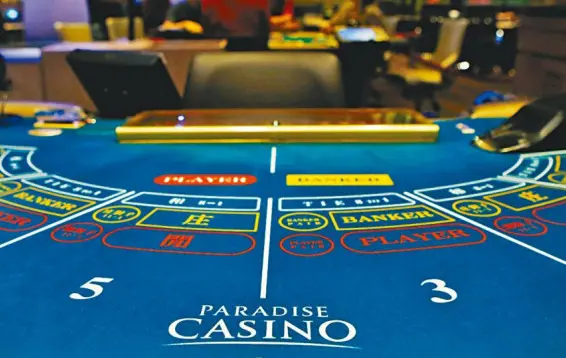
Operators love the suited tie payout because it looks generous on the felt layout while mathematically bleeding players dry. The 22:1 payout triggers the same psychological response as a slot machine jackpot symbol: the brain sees a big number and ignores the frequency. A true fair payout for the suited tie probability would sit closer to 30:1 or even 32:1 depending on the exact suit-matching rule set. The gap between 22:1 and the fair number is where the house builds its margin.
There is also a variation called the "same suit tie" that some tables offer at 18:1. That is even worse. The probability of both hands tying with matching suits on the final card is identical whether you call it suited tie or same suit tie, but the payout drops by four units. This is not a subtle distinction. It is a different bet with a different math profile, and the suited tie payout variance across tables is a red flag for anyone tracking side bet value. 🃏
The Combinatorial Reality Check
Let me give you the raw numbers without the marketing gloss. In an eight-deck baccarat shoe, the total number of possible hand outcomes is enormous, but the suited tie subset is tiny. The probability of a suited tie in a single round is approximately 0.00034, or 1 in 2,941 hands. At 22:1, the expected value per unit wagered is negative 0.245, meaning you lose 24.5 cents on every dollar you put behind that bet. Compare that to the standard tie at 8:1, which carries an expected value of negative 0.144. The suited tie is nearly twice as bad as the regular tie, and the regular tie is already a terrible bet. ⚠️
The only scenario where the suited tie payout approaches anything resembling fair value is in a single-deck game with specific penetration and card removal conditions. Even then, the edge remains above 15 percent. The suited tie payout structure is not designed to reward players. It is designed to extract maximum value from the illusion of a premium wager. Anyone who tells you otherwise is either running the table or running a scam.
Track the frequency yourself across 500 hands. If you see more than two suited ties, the shoe is either rigged or you are running hotter than the math allows. The 22:1 payout cannot absorb the 1 in 2,941 frequency without the house printing money on every cycle. That is the entire mechanism in one sentence.