Casino Cookie Encryption Codes: Free Slots Privacy Settings Guide
Every time you spin a free slot, the casino's client-side architecture is silently harvesting a chain of encrypted session tokens, and most players have zero clue what those cookies actually expose. The privacy settings buried inside your browser are not decoration — they are the only firewall between a clean session and a fully fingerprintable gambling profile. 🎰
What Casino Cookies Actually Store
Session cookies on free slot platforms typically carry a composite payload: a hashed account identifier, a game state vector, and a device fingerprint salt. The encryption layer — usually AES-128 in CBC mode on legacy stacks — is not there to protect you. It exists to prevent tampering with the session so the operator can trust its own telemetry. When you ignore cookie encryption codes, you hand over a persistent identifier that links every spin, every bet pattern, and every idle minute to your device.
Hard truth: any platform that issues a cookie with a 365-day expiry on a free slots page is building a long-tail behavioral profile. That is not paranoia — it is standard retention math.
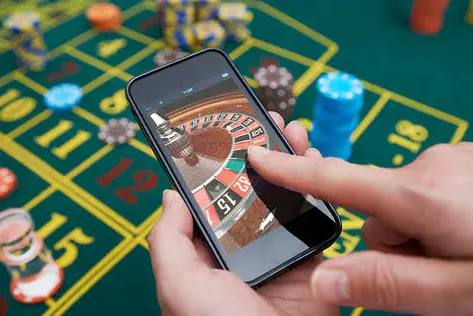
Reading the Encryption Flags Before You Spin
Open your browser's developer console and inspect the Set-Cookie headers on the first page load. You want to see three flags: Secure, HttpOnly, and SameSite=Strict. If any are missing, the free slots privacy settings on that site are effectively cosmetic. A cookie without HttpOnly is readable by injected scripts — and free slot sites are notorious for third-party tracking pixels that execute in the same origin context. 🔍
Look at the cookie name structure too. Names like "sess_", "uid_", or "fp_" are dead giveaways. The fp_ prefix almost always means a device fingerprint hash. Once that hash is set, deleting your account does not delete the identifier — it just detaches it from a username.
Hardening Your Browser Settings for Slot Sessions
Set your browser to block all third-party cookies outright. This single change kills the cross-site tracking mesh that free slot aggregators rely on. Then enable "clear cookies on close" for the gambling domain specifically — not globally, because you will break your banking sessions. Use a dedicated browser profile for slot play, and never log into that profile with your primary email. 🛡️
Container tabs are your best friend here. Firefox containers isolate cookie jars per tab, which means a tracking script on the slot page cannot read your social media session. If you are on a Chromium build, use a separate OS-level user profile instead.

The Encryption Code Myth Worth Killing
No, you cannot "decrypt" a casino cookie to reveal your balance or manipulate a spin outcome. That narrative floats around forums and it is garbage. The encryption protects server-side integrity, not player advantage. What you can do is audit what the cookie transmits — the payload size, the update frequency, the domains it pings. A cookie that refreshes its value on every spin is a live telemetry beacon. A static one is just a session keeper. Know the difference before you trust any casino cookie encryption codes guide that promises more.
Check the cookie's domain scope. A cookie scoped to ".example-casino.com" leaks across every subdomain, including affiliate trackers and CDN endpoints. Scope it tight or block it entirely.
Session Isolation Tactics That Actually Work
Rotate your session identifier manually by clearing the specific cookie mid-session — not the whole jar. This breaks the continuity of the behavioral fingerprint without logging you out of the game state if the platform stores progress server-side. Test it on a demo slot first. If the spin history resets, the platform is cookie-dependent and you have just confirmed a privacy liability. 🎲
Finally, disable WebRTC and canvas fingerprinting in your browser settings. Cookies are only half the tracking equation; the other half is passive fingerprinting that survives every cookie wipe. A slot session that looks identical across ten visits is a session that has been tagged at the hardware level.